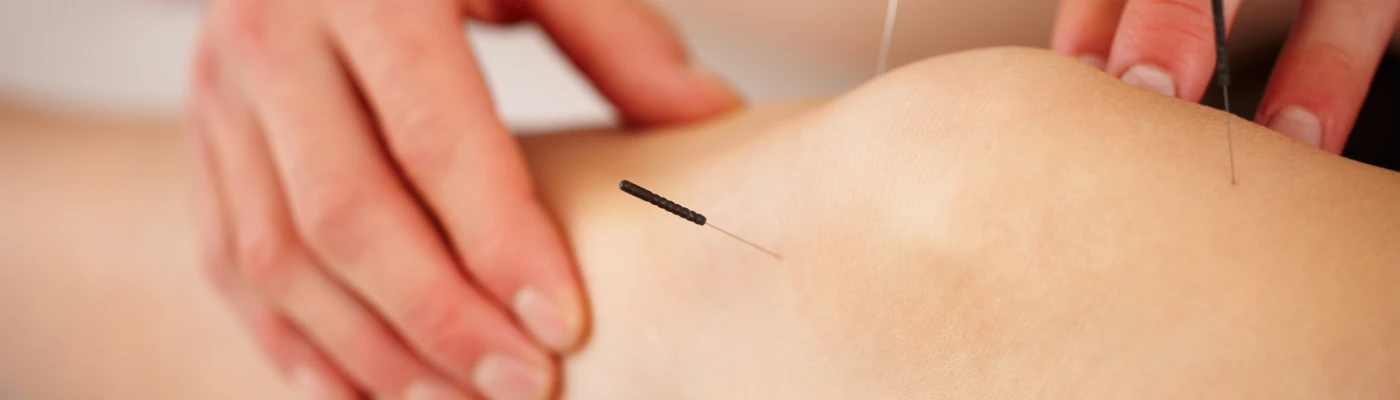
At Feel Amazing Wellness Centre in Chatswood, our qualified and experienced practitioners use dry needling to help manage muscle pain, release tension and support recovery from injury and musculoskeletal strain. Dry needling involves the insertion of thin, sterile needles into targeted areas of muscle and soft tissue. There is no fluid in the needles, hence the name “dry” needling.
Dry needling is commonly used as part of musculoskeletal treatment and may be incorporated alongside massage or chiropractic care depending on your individual needs.
What is dry needling?
Dry needling may look similar to acupuncture, as both use fine, sterile, stainless-steel needles inserted into the skin. However, dry needling is a Western-developed treatment specifically focused on musculoskeletal issues, whereas acupuncture is part of Traditional Chinese Medicine (TCM) and works on different principles. Learn more about acupuncture.
In dry needling treatment, needles are inserted into targeted areas of muscle tension and trigger points to help reduce tightness, improve movement and support normal muscle function. Treatment may also help reduce sensitivity in areas that are painful, restricted or overactive.
What can dry needling help with?
Dry needling is commonly used to treat pain and dysfunction in musculoskeletal conditions, including:
- Neck pain and stiffness
- Shoulder impingement
- Tennis elbow and golfer’s elbow
- Carpal tunnel syndrome
- Headaches and migraines
- Knee pain and osteoarthritis
- Plantar fasciitis
- Lower back pain
- Hip pain
- Muscle strains and sprains
- TMJ (jaw) tension
Dry needling at Feel Amazing
At Feel Amazing, we have practitioners across multiple disciplines who use dry needling, each bringing their own expertise to the treatment.
With massage - Our massage therapists can combine dry needling with remedial massage in the same session. Dry needling may be used first to help release muscles that are very tight, in spasm or sensitive to touch, followed by massage treatment focused on reducing tension and improving comfort and movement. Many clients find this combination helpful for relieving pain, reducing inflammation, easing headaches and migraines, and improving overall wellbeing. Claimable under remedial massage through HICAPS. Learn more about massage.
With chiropractic - Our chiropractor Elijah may incorporate dry needling into chiropractic treatment where appropriate. Dry needling can help address muscle tension, trigger points and restricted soft tissue areas alongside joint and movement-based treatment approaches. This approach is commonly used for both acute and longer-standing musculoskeletal concerns. Claimable under chiropractic through HICAPS. Learn more about chiropractic.
Acupuncture - For those interested in a traditional approach, our acupuncturist Sumin provides TCM-based needling treatment. While the technique looks similar, acupuncture works on different principles and may be suited to different concerns. Learn more about acupuncture.
Does dry needling hurt?
Some temporary discomfort is normal when the needles are inserted. A brief twitch response can sometimes occur when treating a trigger point. This is a common muscular response during dry needling treatment. Pain usually subsides as the muscle releases, though a duller ache may be felt.
While dry needling can feel intense in some areas, treatment should remain manageable and your practitioner will always adjust their approach based on your comfort level and response.
What to expect after dry needling
Some soreness may be felt afterwards, varying with the individual and their body’s response. This is similar to the feeling after a solid workout or a firm massage. It may last for 24 to 48 hours.
- Listen to your body and avoid strenuous activity afterwards
- Drink plenty of water
- A heat pack can help with any residual soreness
- Stretch and move your body gently to keep muscles from tightening up again
Some people notice improvement quickly, while others benefit from a series of treatments over time depending on the nature of the issue being treated.
Are there any risks?
As with any treatment, there may be some risks:
- Minor skin bleeding or bruising at the insertion site
- Pain during or following treatment
- Some people may feel lightheaded, sweaty or nauseous, particularly if they are nervous about needles
- Contraindications exist for patients with bleeding disorders or who take blood thinners. Please inform your practitioner and seek medical advice before treatment.
All needles used at Feel Amazing are single-use, sterilised, professional-grade acupuncture needles. Only practitioners with appropriate qualifications and experience provide dry needling treatment.
Your practitioner will explain the treatment process, discuss any relevant risks or considerations, and obtain your consent before dry needling begins.
How dry needling works with our other services
Dry needling and massage - The most common combination at Feel Amazing. Dry needling releases deep tension, and massage works through the area afterwards. Can be done in one session. Learn more about massage.
Dry needling and chiropractic - Elijah may use dry needling alongside chiropractic care to help reduce muscle tension and support movement and comfort during treatment. Learn more about chiropractic.
Dry needling and naturopathy - Some clients choose naturopathic support alongside treatment for recovery, stress management and general wellbeing. Learn more about naturopathy.
Dry needling is used as part of musculoskeletal treatment provided by qualified practitioners at Feel Amazing Wellness Centre. If you have a serious health condition, are pregnant, or take blood thinning medication, please discuss this with your practitioner before treatment. A full health history, assessment and informed consent process will be completed before dry needling is performed.